You that seek what life is in death,
Now find it air that once was breath.
New names unknown, old names gone:
Till time end bodies, but souls none.
Reader! then make time, while you be,
But steps to your eternity.
| “Code blue, 2G Golf emergency room resus. 1… Code blue, 2G Golf emergency room resus. 1… Code blue, 2G Golf emergency room resus. 1…” .
| Get your respirator on!
| Clear the room, everyone gowns on!
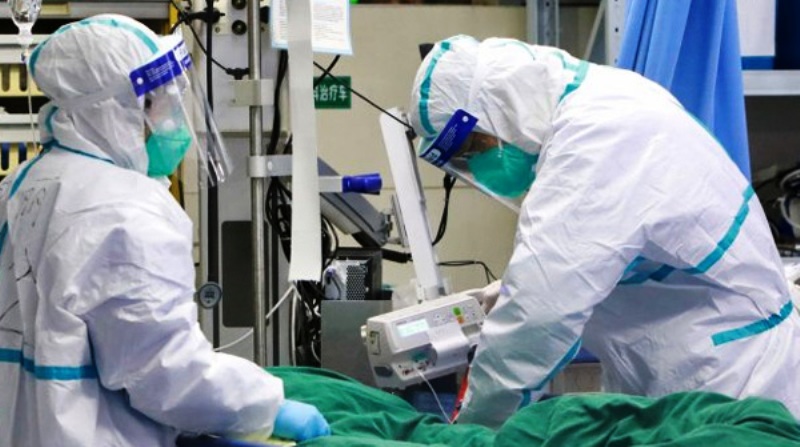
As the doors to the emergency room burst open, EMS were already fighting to save her life: “1, 2, 3, 4, 5…1, 2, 3, 4, 10…”. The 70-year-old house-fire victim’s heart had stopped for thirty minutes as she drew closer and closer to death. Physicians, residents, and nurses rush into the room to take turns performing CPR in an excruciating and extraordinary race against death. As I stood staring in awe at the finely coordinated chaos in that room, I began to meditate on the fragility of humans amid our arrogant perception of invincibility to disease and death. It is not until we are emotionally vulnerable and encountering death, whether directly or through a person whom we have a connection to, that we begin to feel grounded in reality; we are trapped in this life as we slowly march towards an inevitable death that is plagued with uncertainty. That very woman I saw just moments ago was now dead… everything ‘human’ about her extinguished.
Although cardiac arrest remains one of the leading causes of death globally, advances in resuscitation science over the last 60 years have led to a greater number of survivors annually, with many resuming normal daily function. Cardiac arrest is no longer a certain death and recently documented survivor accounts have forced us to shatter the boundaries between life and death and question our medical, spiritual, and cultural definitions of death. The generally accepted idea of death is a moment in time where a person ceases to exist and their memories, emotions, and experiences vanish into a void, saved only by those who have a recollection of the individual. Whether a soul exists or not which carries those worldly characteristics on to another realm is an artifact of humans attempting to make sense of death through cultural and philosophical impressions.
The most fascinating aspect of death to me is despite cultural differences in interpretations of death, every human must experience it the exact same way. Whether we choose to actively acknowledge its presence or force it behind a veil of ignorance, it will one day knock at our doors and we have no choice but to let it in. With no certainty of when, where, or how we will come to experience it, most resort to stigmatizing it and casting it as an evil that must be avoided and while this is a reasonable approach to making sense of suffering, it gives rise to a sense of inevitability that seeps into our beliefs causing us to merely survive rather than truly live.
“Death comes for all of us. For us, for our patients: it is our fate as living, breathing, metabolizing organisms. Most lives are lived with passivity toward death — it’s something that happens to you and those around you.”
– Paul Kalanithi, When Breath Becomes Air
What does it mean to ‘truly live’ rather than ‘merely survive’ as the quote suggests? Is appreciation of life enough of an act that acknowledges our death and suffices to give meaning to life? What must we do so at the moment death approaches us we say ‘I am ready’ rather than being resentful of it? Because death is something we all grapple with differently, each perception of it is unique as elegantly put by Dr. Sherwin B. Newland: “Every life is different from any that has gone before it, and so is every death.” The astonishing variety with which we choose to react to death has become evident through my interactions with terminal cancer patients:
"...have you felt satisfied?" I asked, as I faced a frail and tearful 79-year-old terminal cervical cancer patient. With her sky blue eyes glossy and filled with silent but telling emotions she looked back at me and responded "Well...just a few extra weeks is all I'd want. Let me tell you now, I have lived a long life but it does not feel enough, it never will feel enough. If I can tell you one thing it's don't grow old...stay young." With a naïve curiosity I asked "Why? What is it that you don't want to experience? What did you wish to experience instead?". She continued "There is nothing to hold on to anymore. All my life I've spent with family, friends, work...it just does not feel right to let all that go and leave. Am I satisfied? Sure I've experienced "life" but it does not feel real to be slipping away from it all... I feel lost and empty, as if there's more to it than this but nothing can change this feeling. I just have to accept that this is the end."
It was six weeks later that she would go into hospice care and pass away shortly after. To this day I continue to meditate on this unique interaction and there is still so much to learn from it. To think this warm soul I connected with by sharing thoughts and emotions was now gone and no remnants of her exist except as a memory in my mind is as astonishing as it is heart-wrenching. Why, after 79 years, with over 70 000 hours of life and endless potential to experience ‘life’, did she feel empty? With twenty-four hours in a day, there is theoretically enough time to experience the moments that would make us more accepting of death and yet many feel it is not enough. Do we, as humans, make ourselves falsely believe there are things we’re missing out on if we go? What is it that she could have done, as subjective as the answer is, to be open and accepting of death? Her final words “…nothing can change this feeling” often occupy my mind and it is through her lens that I got a glimpse into the process of dying, and it taught me that death strips us of all dignity and confidence in satisfaction, forcing us to question whether our life was enough.
Her story is only one of many I have come to know of. Whether it’s the 83-year-old terminal lung cancer patient who sat speechless when asked if she was satisfied or the CEO of an international manufacturing company, the responses are predominantly those of fear and confusion toward death. Their hindsight had led them to believe they had more to reap than they sowed for in life, but what more could they have done to feel prepared for death, and what can we learn from that as we approach our own death? It seems we are taught how to live (or survive) but no one teaches us how to die, and how to do so with dignity.
“Though everyone may yearn for a tranquil death, the basic instinct to stay alive is a far more powerful force”
Sherwin B. Nuland, How We Die: Reflections of Life’s Final Chapter
One of the most pressing uncertainties of death that plagues our medical, philosophical, and spiritual understandings of it is what happens after the death of an individual. To me, I see the human body as an earthly container that is animated by our soul. My view of a soul is not the classic ghost-like figure but rather an inexplicable force that accounts for every non-physical phenomenon. As Dr. Sherwin Newland puts it, “…and when the human spirit departs, it takes with it the vital stuffing of life. Then, only the inanimate corpus remains, which is the least of all the things that make us human.” This begs the question of whether or not the soul is a byproduct of the most well-developed brain to ever exist which never ceases to think. If not, then can elephants, jellyfish, and pandas contemplate on the existence of a soul or do they just ‘see’ death and move on (e.g. other animals dying around them). Furthermore, does the soul animate our brain giving rise to a mind or is our body animated by our brain which then creates the idea of a soul? I believe trying to separate the idea of a ‘soul’ from the ‘mind’ is as wasteful an effort as trying to separate emotion from experience: thinking of a soul without a mind collapses the entire idea of a soul.
Thinking back to some accounts of cardiac arrest survivors, some had experienced clinical death for upwards of an hour before they were resuscitated. How do these experiences fit into our scheme of the soul if the exact moment of death marks the extinction of all worldly affairs of an individual? Where does the soul go for that length of time before resuscitation? Based on these experiences, where can we draw the boundary between life and death? If someone can be past the threshold for clinical death and still be resuscitated then I believe death is not an all-or-nothing moment but rather a complex landscape of multiple possible trajectories with some reversible pathways and other irreversible ones. Going down one path can lead to the reversal of death under the right conditions depending on cause of death, patient demographics, medical history, and quality of care given at death and going down another path leads to irreversible death.
“People have described a sensation that their self – the part that makes them who they are – separates from their body and they’re able to have external visual awareness,”
Dr. Sam Parnia, MD. Erasing Death
We as sentient beings are driven by meaning and we seek to imprint meaning to any experience, thought, and emotion in our life. As such, any attempt to explain what happens post-mortem will be tainted by religious and cultural beliefs that seek to give meaning to the suffering of death. In my personal search for answers to uncertainties of death, I try to maintain an unbiased view free from religious and cultural biases. The fact that every human has to experience it irrelevant of their religion, culture, and beliefs makes it imperative that we examine it with an unbiased lens, and I can only hope I am fortunate enough to understand it before my own inevitable death… and yours.
 An Explorative Mind